
Blake Taylor
What Does a Business Broker Do During the Sale Process?
When it comes to selling your business, there are countless moving parts and complex processes to navigate, and it can …
9 MIN READ
Read More


Selling your business is an exciting prospect. It can mean a new start or a well-deserved ending. In either case, it means change.
However, before you can begin your next adventure, you must navigate the sale of your business. The process can be long and complicated, thanks to the legal requirements to sell a business. It’s not a simple handshake before you hand over the keys. Instead, there are plenty of checks to make, contracts to write and documents to sign to ensure the sale is legal.
Working with a business broker is the easiest way to make sure you tick all the necessary legal boxes. At Synergy Business Brokers, we specialize in selling businesses. We can help business owners get the best deal possible, find the best buyers, and breeze through the legal complexities of the sale.
As a business owner, you may not want to deal with the legalities of selling your business. However, the laws on buying or selling a business are there for good reason. Managing the sale by the book every step of the way protects both the buyer and the seller from risk.
Clear and unambiguous legal documents protect the seller from undue financial loss, public revelation of confidential business information and future legal disputes. These documents also protect the buyer from purchasing a company with undisclosed problems, liabilities or complications. In short, it ensures they’re buying the business they believe they’re buying.
You’ll need help ensuring all the required business sale documents are signed and complying with all necessary laws. Enlist the help of attorneys, accountants and, if you want the best chance of selling your business successfully, a business broker.
Every business sale is different, but the documents needed to make the sale legal and protect both parties rarely change. Documents you should expect to see when selling your business include:
The legal steps to sell a business are rarely simple, thanks to the requirements the buyer and seller must fulfill. Here’s how you can expect the process of selling your business to look.
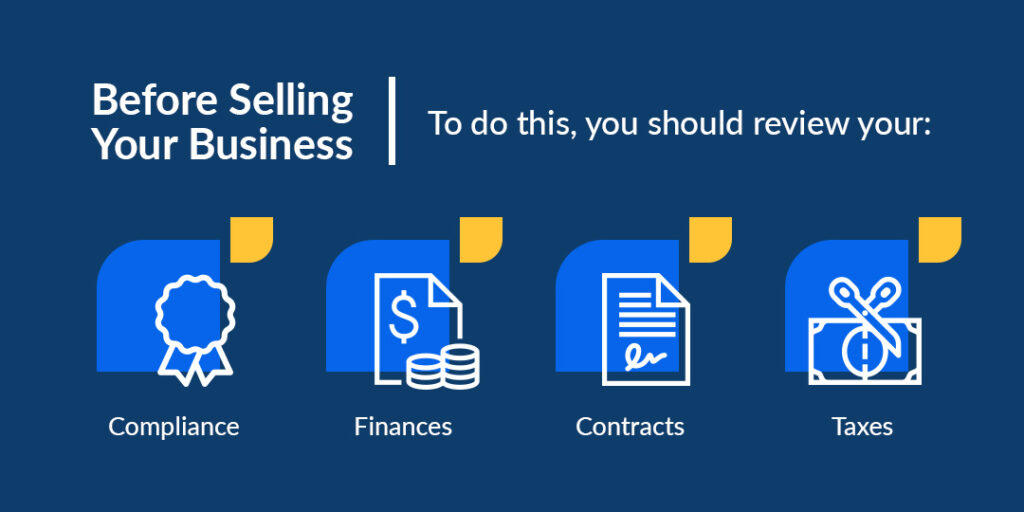
Before you start the selling process, you need to get your business in the best position to be sold. You also need to be aware of your legal obligations as the seller and consider the legal steps that will be taken during the process. To do this, you should review your:
A business broker can help you review these and advise you on any issues you may need to address to prevent the sale from being delayed or falling through.
You can start your buyer search once your business is ready for sale. You can find a buyer through networking events or online advertising, but the easiest and most profitable way is to use a business broker. They’ll help you market your business in line with Federal Trade Commission guidance, assess the buyers and get the best offer for your business. Many brokers may already have potential buyers in mind; however, to get the best price you want to have a number of buyers in the mix.
After your business broker identifies a potential buyer, they will ask them to sign a confidentiality agreement before providing any more details on your business. The best business brokers will find several potential buyers so you can identify the best buyer for your business. This will go beyond the offered price for your business, and can be affected by their financial stability, their experience in your industry and other terms of the sale.
From here, you and your potential buyer can leave no stone unturned as you discuss the sale.

Once you and your potential buyers have all the necessary details and both parties are interested, negotiations can begin. The first step will be for the buyers to submit a written offer. You can review these with your business broker to ensure they meet your valuation expectations. These expectations should be based on a professional valuation of your business, rather than just what you believe it’s worth. Your broker can evaluate your business and provide a valuation based on its revenue, net income, assets and opportunities for growth.
Beyond the offered price, you need to consider other aspects of the offer and ensure it doesn’t present any potential legal issues or other hurdles. Many offers will also contain further NDAs, non-compete agreements and confidentiality clauses. When reviewing an offer, consider how each of these will affect you after the sale has been finalized.
After choosing the offer closest to your expectations, you can negotiate for improved terms. You can also negotiate legal considerations, such as the buyer’s level of due diligence.
When both parties have agreed, your broker can assist the buyer in writing a letter of intent, giving the buyer a set period to complete their due diligence. The letter of intent will also specify whether the buyer has exclusivity to pursue the purchase during this time.
The buyer can begin their due diligence after signing the letter of intent. Due diligence when selling a business involves the buyer reviewing your company to verify your claims and look for potential issues. You and your broker’s earlier legal preparations will make due diligence go more smoothly and may make it more likely that the buyer will find no causes for concern.
Generally, the buyer’s attorney will review all contracts and any other legal documents associated with your business. They will also check for pending lawsuits or anything else that could cause a problem for the buyer. To allow the buyer to carry out their due diligence, you may be asked to provide:
When the buyer is satisfied that they’ll be buying the business as they expect it to be and that there are no legal issues, both parties can finalize the sale.
Once the buyer has completed their due diligence, the business sale’s closing process can begin in earnest. Your attorney will draw up a contract before the buyer’s attorney reviews it. Often, their attorney will find terms they want modified or issues with the contract’s wording, which they’ll discuss with your attorney. When both parties agree on all the terms, you can sign the sale agreement.
At this point, the final legal documents, such as the bill of sale and any assignment agreements, can be signed. The business’s assets and obligations then transfer to the buyer. To ensure regulatory compliance of the business sale, you must make the necessary filings.
While there may be an agreed transition period, you will have officially sold your business at this point.
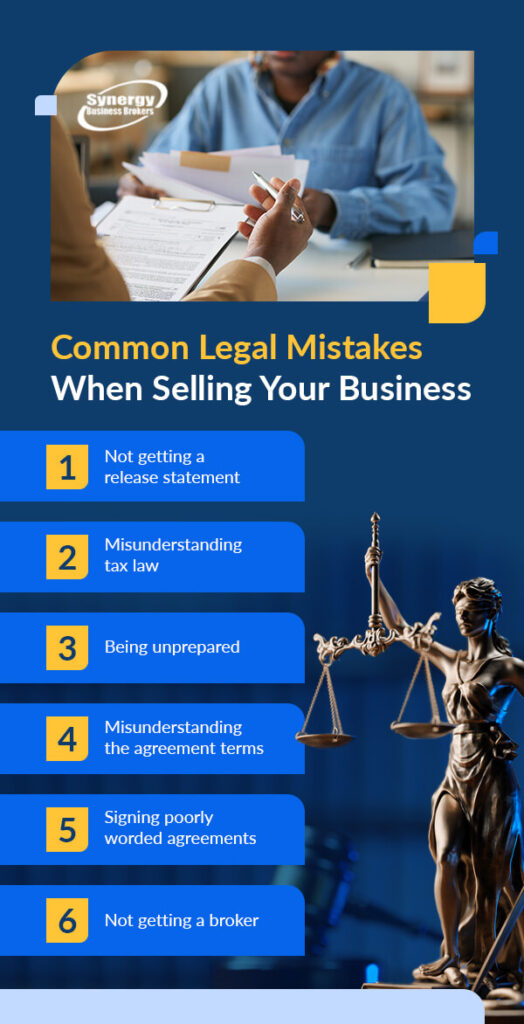
Selling your business can be a legal minefield, and mistakes can be expensive. Here are some of the most common mistakes business owners make during the sales process:
While many business owners may worry that getting a broker is an unnecessary expense, the value they provide is well worth the price. Your broker will help you at every step of the sale. From initial preparation and finding various suitable buyers to helping you get a satisfactory sale agreement, they can streamline the whole process and get you more for your business.
In particular, your broker will:
In short, your broker will help you through the sales process to reach a result you’re more than satisfied with, while avoiding the various legal risks of a business sale. However, it is essential to note that business brokers don’t provide legal advice.
If you are looking for a broker to help sell your business, you should look for several things. These signs will help you decide if the broker is reputable, reliable and right for your business:
There are many legal pitfalls you can fall into when selling your business, but Synergy Business Brokers can help you avoid them. With over two decades of experience helping owners successfully sell their business, we know the process inside out. And, thanks to a database of more than 40,000 active potential buyers looking for businesses in various industries from construction and manufacturing to health care and home services, we can help you source multiple offers and find the best one for you.
If you’re considering selling a business with annual revenue of between $700,000 and $250 million, sign up for your confidential consultation with us today. With no costs until your business sells, you have nothing to lose by talking to one of our experts.