
Blake Taylor
What Does a Business Broker Do During the Sale Process?
When it comes to selling your business, there are countless moving parts and complex processes to navigate, and it can …
9 MIN READ
Read More

When it comes to selling your business, there are countless moving parts and complex processes to navigate, and it can be challenging to market and sell your business alone. Alongside the financial stressors and business decisions, you might face emotional hurdles when letting go of a personal venture.
As a business owner, your company is worth more to you than just a number on a page. With the right guidance, you can sell your business not only for its maximum value, but also in the knowledge that you are placing it in the hands of the right people.
This comprehensive guide from Synergy Business Brokers covers all you need to know about how a business broker can help you during the sale process. From key responsibilities to specific qualities to look out for, this guide provides essential guidance for business owners looking to sell.
A business broker is someone who helps individuals buy and sell businesses. They act as an advisor, providing support, guidance and expertise throughout the entire process, from business valuation to contract negotiations.
When you hire a business broker to help you sell your business, they serve as a professional intermediary between you and potential buyers.
Business brokers guide you through each step of the selling process, starting with initial consultations and ending — hopefully — in the successful closure of a deal and the transfer of ownership.
To understand the role of a business broker, we can explore each step of the selling process and establish their involvement.
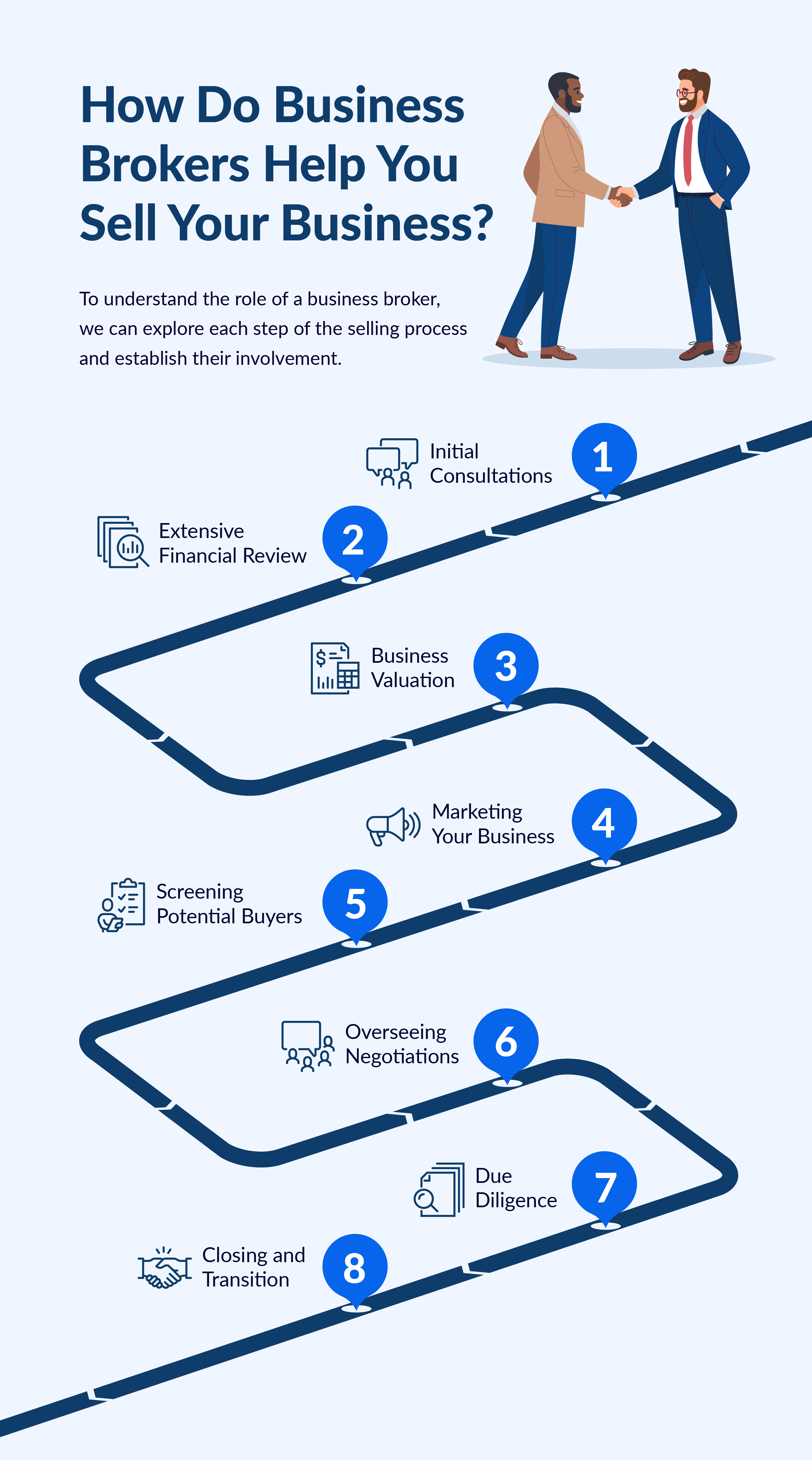
If you are considering selling your business, your first point of contact with a business broker will likely be at an initial consultation.
During these consultations, the broker will first and foremost help you determine whether selling is the best option for you. By learning more about your business, your broker can use their industry expertise to give you tailored advice.
Information your broker may need includes:
Once they have the information they need, they can educate you on industry standards and current market conditions to determine your options and share advice on possible next steps. If you and the broker agree that selling is your best option, you can proceed to the next step.
Alongside general information about your business, your broker will need a deeper understanding of your business’s financial health and growth opportunities to generate an accurate valuation. Before you hand over detailed financial information and other sensitive data, brokers will sign a confidentiality agreement for your peace of mind.
In addition to your business’s detailed financial records, including several years’ worth of tax returns and profit and loss (P&L) statements, they will likely also request financial information specific to you, the owner. This may include your:
The broker uses this information to understand your business’s current worth and potential for growth, which informs their valuation.
With their extensive experience and market knowledge, brokers compare aspects of your business with current market conditions, industry standards and similar business valuations to determine a potential asking price.
There are numerous approaches for valuing a business, but most brokers use one, or a combination, of these three methodologies:
Throughout the valuation process, your broker should be transparent in their approach and clearly explain how they reached their valuation. Once they have settled on a specific value or range, your broker will likely request your feedback to see how it aligns with your expectations.
While brokers want to satisfy their clients’ needs and price expectations, they also provide realistic and unbiased price estimates to ensure you have the best chance of selling in a reasonable time frame at a fair value.
Your business broker will collaborate with you to help you prepare your business for sale. One of the most critical steps is to develop a robust marketing strategy that is tailored to your target buyer market and maximizes your visibility. The marketing stage typically involves these four elements:
First, business brokers market a business for sale by creating two key marketing documents, which provide potential buyers with important information about your business and make it appealing to them on paper.
The two key marketing documents are:
Creating these key documents is a collaborative process that combines the broker’s relevant expertise with the owner’s in-depth understanding of their business.
Your business broker will advertise your business on various online listing platforms where members of your target market are present and active. The more viable channels your broker uses, the higher your business’s visibility will be and the easier it will be to sell it at your ideal value price.
Online listing channels include:
Well-established brokers will have an existing network of potential buyers to tap in to. Through their connections with investment organizations, such as private equity firms, banks, attorneys, and other business brokers, they can also increase your visibility and appeal to a broader array of suitable buyers.
Some brokers take a more direct approach to buyer outreach. They may personally contact potential buyers instead of waiting for them to respond to a public listing.
The direct approach works particularly well when your broker has connections with a potential buyer who fits your target buyer persona or has extensive experience in your industry niche.
Some examples of strategic buyers who might respond well to a direct approach include:
To maximize your chances of reaching the right buyer, many brokers will use multiple outreach methods.
Your business broker can help you screen potential buyers and identify viable leads to pursue. From interviewing potential buyers to requesting proof of funds, your broker can help weed out any disingenuous or inappropriate offers.
Once they have helped you narrow down your options and select the ideal buyer, your business broker can guide you through the negotiation process. First the details of an LOI (letter of intent) will be negotiated. Then, based on these terms, a purchase agreement is drawn up and sent to the buyer’s attorney, and further details will be negotiated.
The benefits of having a broker oversee negotiations include:
Throughout the selling process, your business broker will mediate any issues that come up in due diligence to ensure your business and finances are secure and to assess the reliability of the buyer. Once the interested buyer has signed a letter of intent, there are multiple steps you must take before signing the purchase agreement.
Your business broker will help you investigate the buyer’s:
Equally, the due diligence phase provides the buyer with an opportunity to ensure that your business is as robust and healthy as you have presented it to be. The buyer and their legal team will likely also perform commercial, legal and financial due diligence before proceeding to the next phase.
Once both parties are happy with their findings and ready to finalize the deal, they can sign the purchase agreement and organize a closing date. The closing can be conducted either in person, with both parties and their legal representatives present, or virtually.
Upon receiving payment for their business, the seller usually provides a pre-negotiated transition period, during which they may collaborate with the buyer to ease them into handling operations. Depending on the scale of the business and the two parties’ preferences, the transition period can last anywhere from a few days to several years. Throughout the transition period, your business broker can provide support and advice.
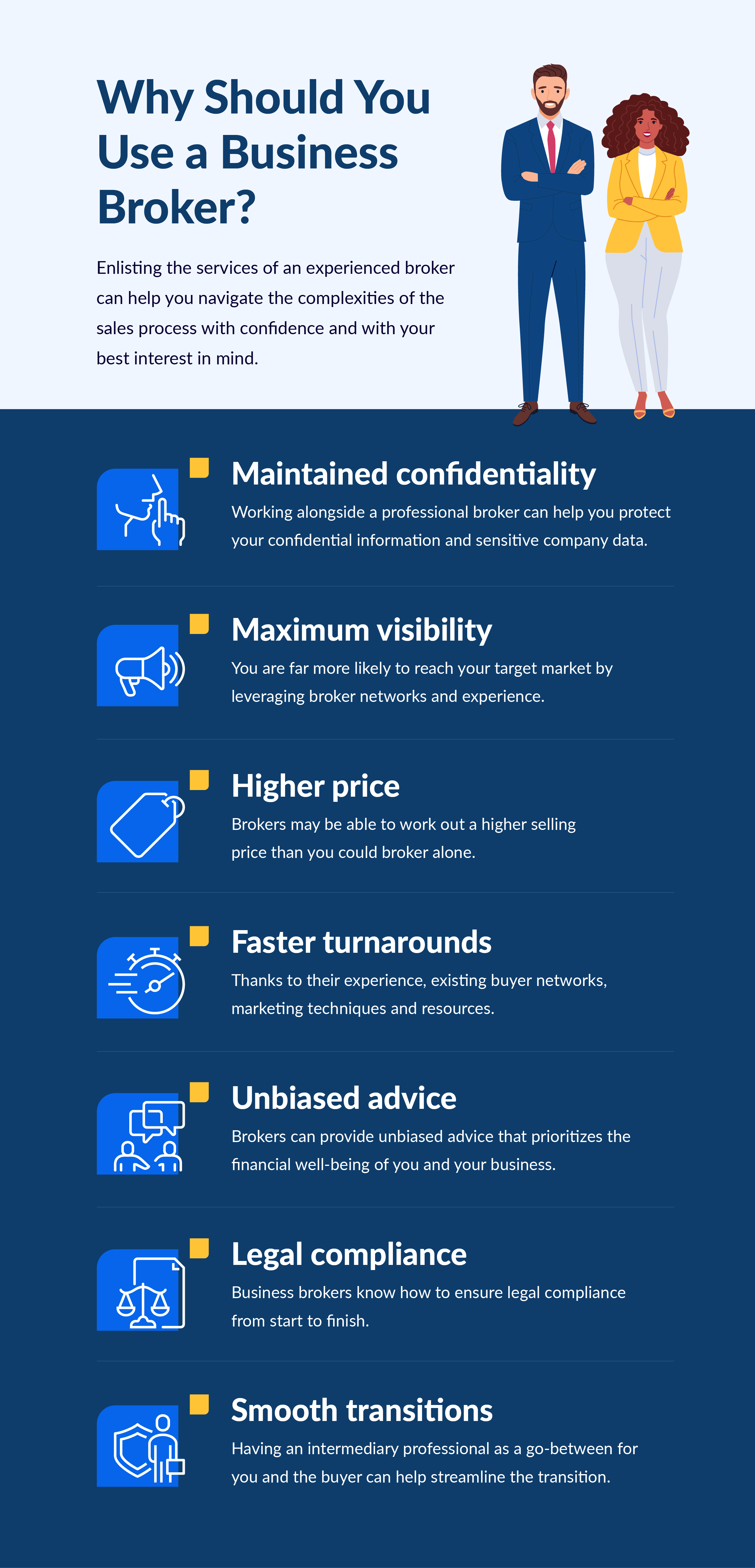
Enlisting the services of an experienced broker can help you navigate the complexities of the sales process with confidence and with your best interest in mind. The benefits of using a business broker include:
Below, we answer some other common questions about partnering with a broker to sell your business.
Some brokers require an up-front retainer for their services, which can range anywhere from $10,000 to over $50,000. However, many brokers only charge commission upon the successful completion of a sale.
The commission fee for most brokers is between 8% and 12% for businesses with a value of up to $1 million, and may decrease for amounts above this threshold.
On average, businesses sell within six to 12 months. However, each situation is unique. While some businesses may sell within just a few months, businesses with more complex circumstances or an asking price that is too high can take years to reach a close.
Although it is possible to sell your business without using a broker, it can make the process more challenging to navigate, and you are more likely to encounter pitfalls.
Common risks of not using a business broker include:
Although both business brokers and real estate agents act as professional intermediaries between buyers and sellers, they have different areas of expertise.
Whereas real estate agents focus on selling physical property and land, business brokers concentrate on selling businesses. If you own the property in addition to your business, Business brokers can provide options, including leasing or selling the property with your business.
In general, if you are looking to sell both your business and its associated property and land, you should choose a business broker if your business is significantly more valuable than your property. Conversely, if your property or land is significantly more valuable than your business, it may be beneficial to hire a real estate agent.
Choosing to sell your business is not an easy decision, and ensuring it falls into the right hands is even harder.
By collaborating with a business broker, you can benefit from their industry experience and negotiating expertise to obtain a fair price and favorable purchase terms.
From maintained confidentiality to faster turnarounds, business brokers provide benefits that streamline the sales process from start to finish.